


Moldavite Snowflakes: White Moldavite
Do you think moldavite is only green? It also exists in a very rare white and frosty form: "snowflakes," among the most fascinating and sought-after aspects of this gem.
01Moldavite is not just green
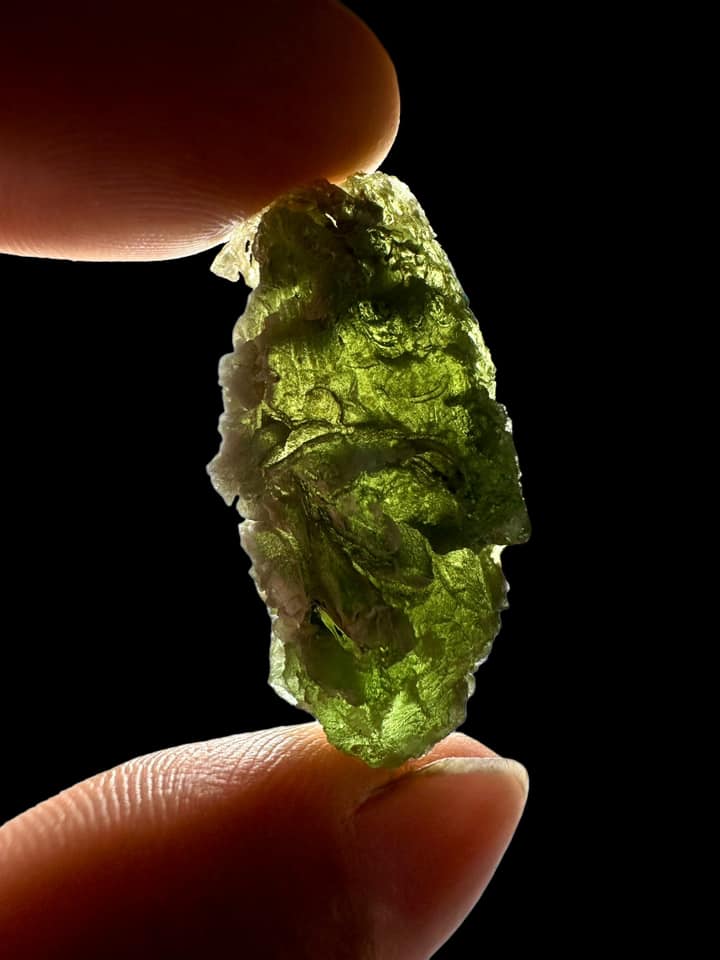
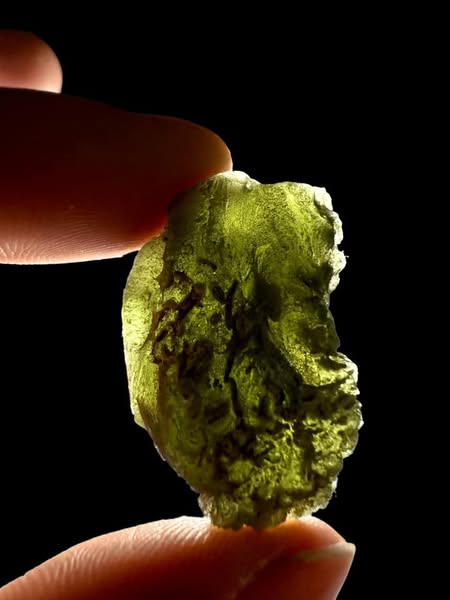
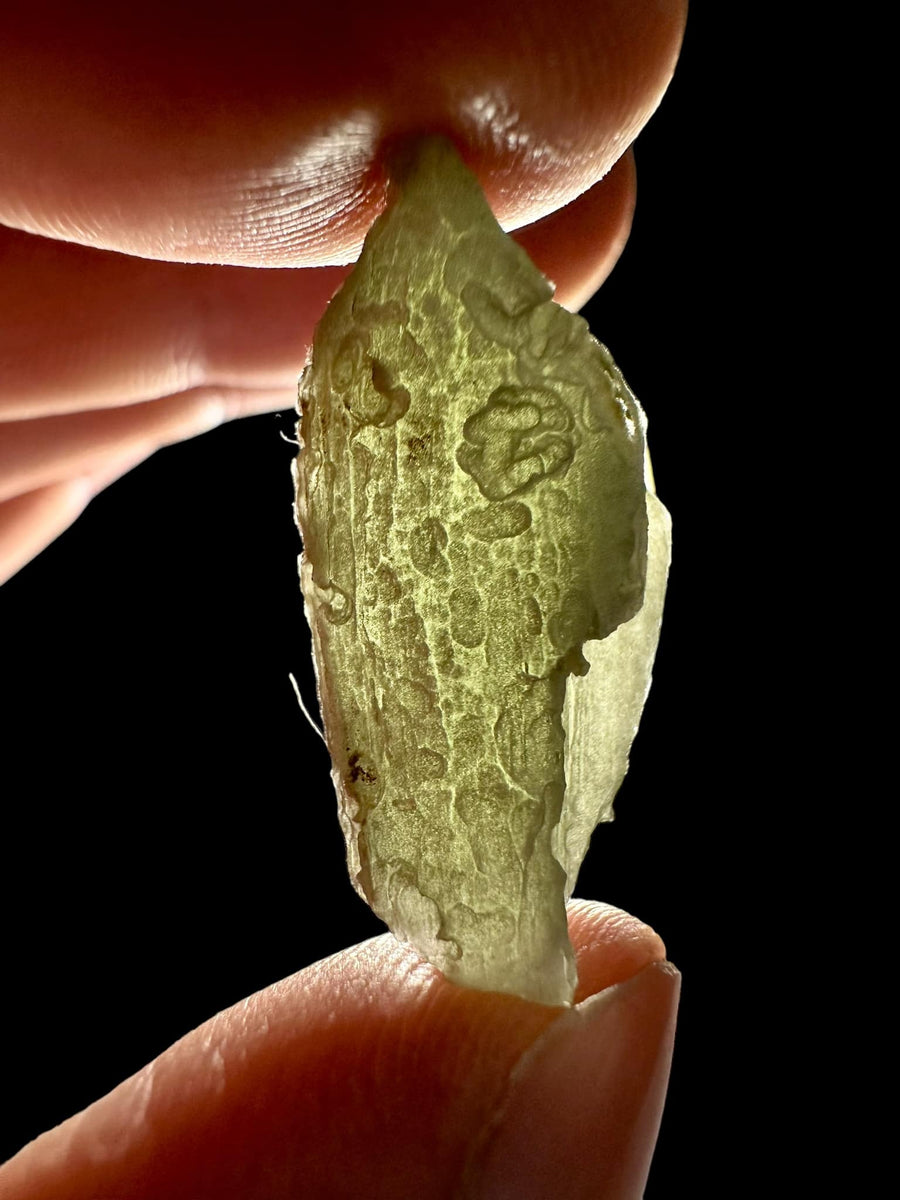
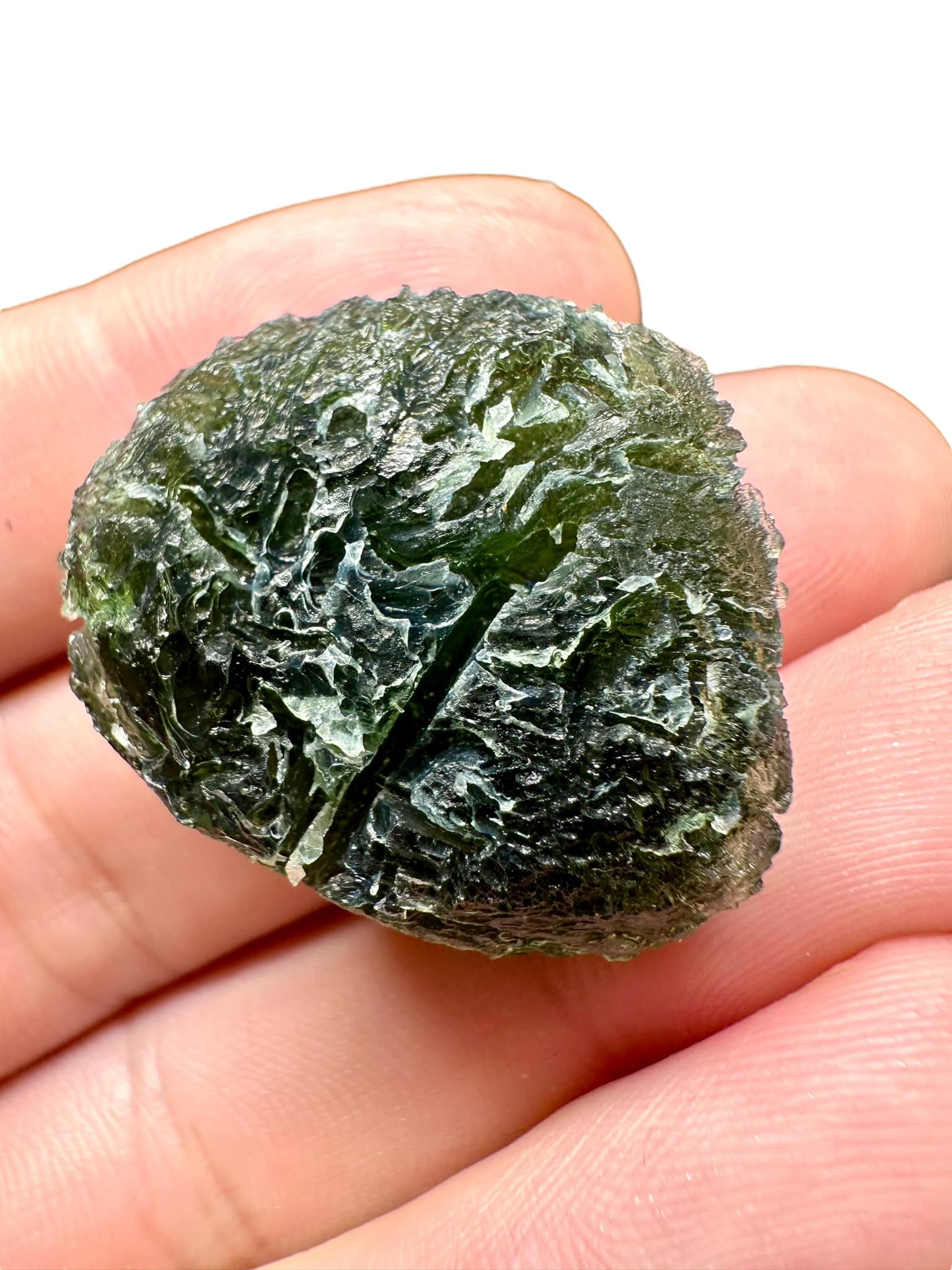
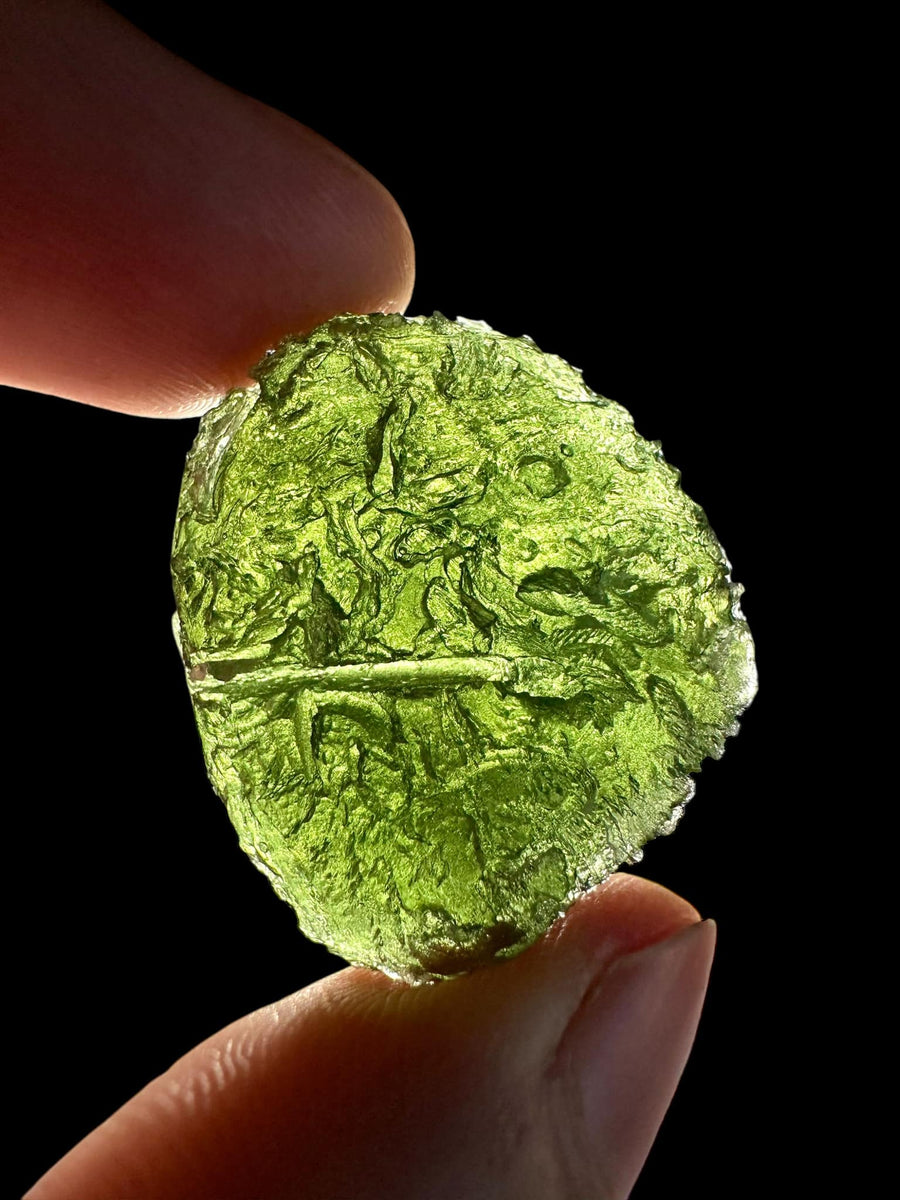
There's a widespread misconception that moldavite is exclusively green. It's understandable — at least 99.99% of what's on the market is green, and it's usually photographed with backlighting, which makes the green stand out. Thicker specimens can even appear black in natural light, only to reveal a splendid green when illuminated from behind (you can see this clearly in the colors of moldavite).
But under special conditions, and over millions of years, moldavite can form with a naturally white surface. The stone remains green underneath; only the outer "skin" is white. You'll rarely see it in stores because it is rare and in very small numbers compared to green moldavite.
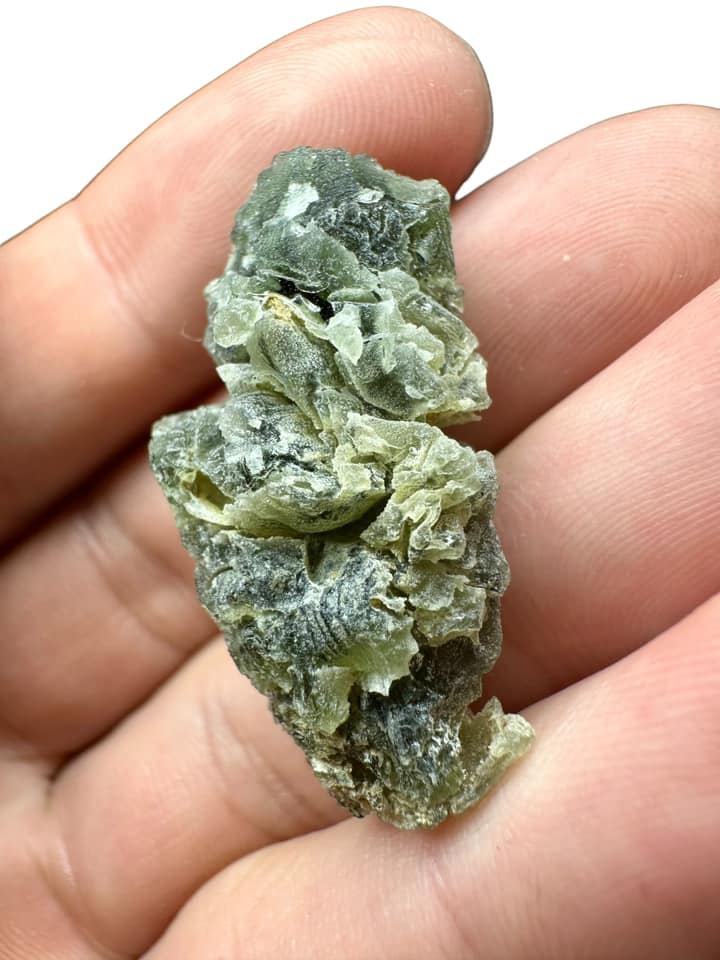
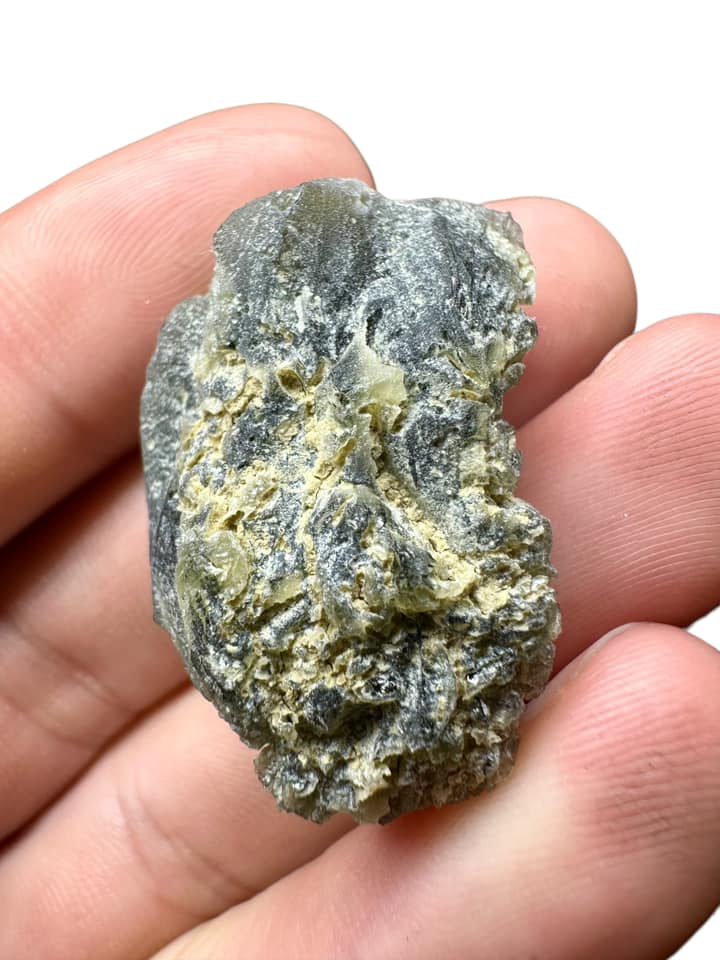
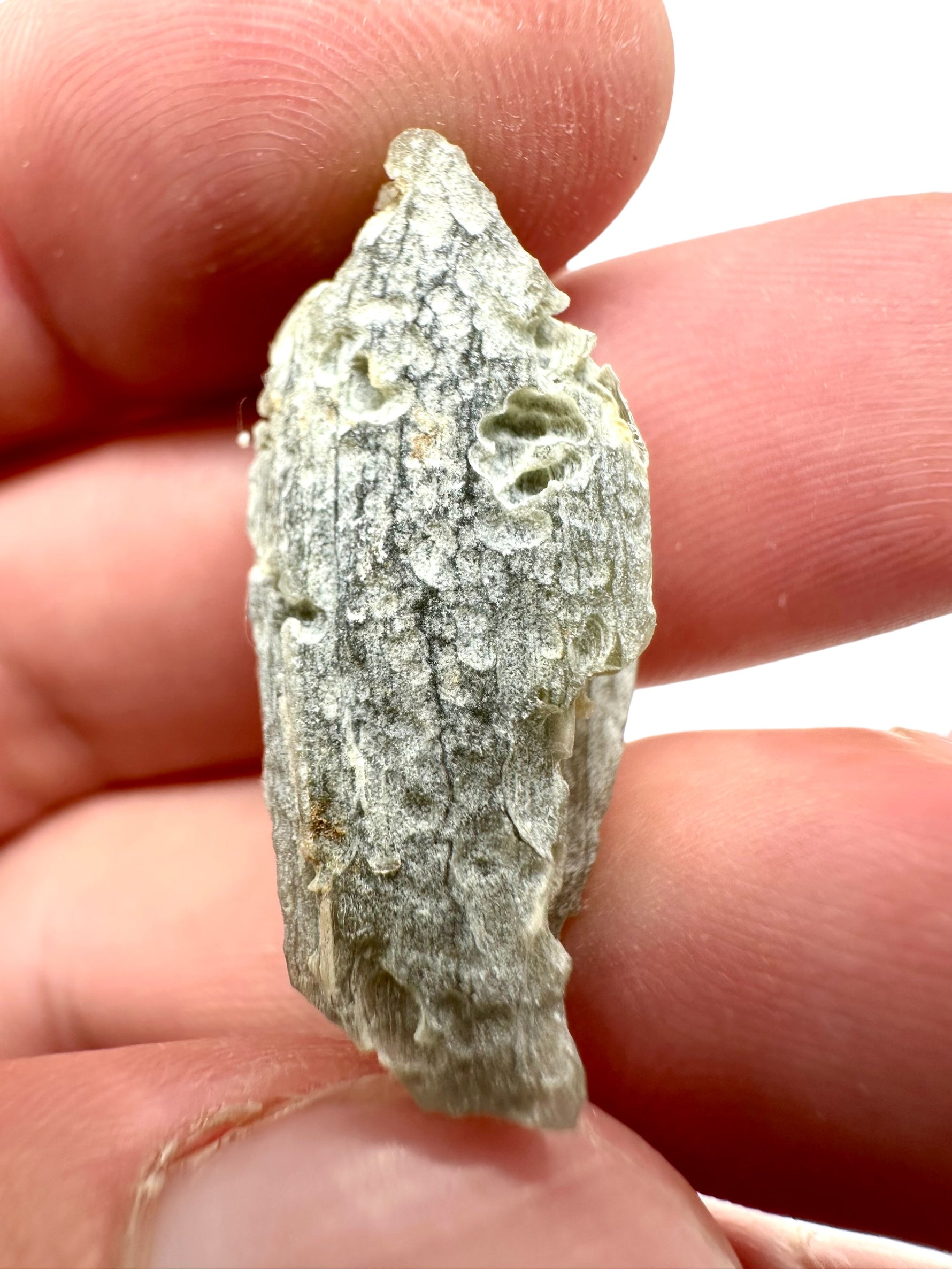
Snowflake moldavites owe their nickname to their white, frosted appearance, which ranges from a very slight veil to a thick, pure white blanket. They are also known as angel feathers, white moldavite, frosted moldavite, and — only if they come from the locality of Brusná — Brusná snowflakes.
02Snowflakes or angel feathers?
White moldavites truly look like snowflakes fallen from the sky; some resemble delicate feathers dropped by angels — hence the name "angel feathers." Up close, the effect is magical, and their beauty and rarity have driven up their popularity and price: a piece that enhances any collection.
What do they look like?
- White frost ranging from a thin veil to a thick and deep surface, either patchy on the green or covering the entire stone.
- Color from pure white to a light gray.
- Opaque and velvety surface, an effect of glass corrosion.
- Not very translucent: it lets little light through, which is why it should be enjoyed in natural light.
03Where they are found
The localities are very few: Dříteň, Brusná, Bartochov, Olešník, Krasejovka, and Jankov. Most white moldavite comes from Brusná. Unfortunately, these few deposits have been depleted for a long time: today, these special specimens can only be purchased from existing collections. To locate these areas geographically, see Southern Bohemia and the different aspects of moldavite.
04How they form
Snowflakes form only in a highly alkaline environment, when the surrounding sediments corrode the outer layer of glass, leaving a white, opaque surface. Additionally, the formation area must not contain water in the soil: water would slowly erode the white "skin." Within the same locality, only a small portion of specimens develop this surface — which is why they are so hard to find.
This is in stark contrast to another famous locality, Besednice, where the sediments were acidic and had more groundwater: different conditions, completely different appearances. It's fascinating how small differences shape such distinct moldavites.
05How rare they are
In each affected locality, only a portion of the moldavite had a white surface: in the depleted field of Brusná, it was estimated that about 20–30% was white, a much lower percentage elsewhere.
A sobering thought: when they were discovered, white moldavites were not appreciated because they differed from the classic green ones. So many prospectors destroyed a lot of them, dissolving their surface with strong acid to resell them as green moldavites. Today, fortunately, snowflakes are loved for their beauty and rarity, and have become among the most sought-after types of moldavite.
Considering how limited the localities are and how strict the formation conditions are, it is estimated that snowflakes represent less than 0.01% of all moldavite. A very small number compared to the total.
06Brusná today: a ravaged field
This is what the famous — but now depleted — Brusná field looks like today. Eloquent images that deserve an important clarification.


⚠️ Legal mines vs. illegal excavation
Brusná was an official and regulated mine, now depleted. This is an important point because in the Czech Republic, illegal moldavite excavation has been a documented scourge for years. With prices rising sharply (moldavite can reach about 300 crowns per gram), organized gangs move from one site to another, digging pits several meters deep: they devastate fields and forests, uproot trees, and leave behind muddy puddles. Localities like Jankov have suffered for decades, and the phenomenon is also documented near Krasejovka, Nesměň, and Chlum nad Malší. Neither landowners nor the state receive a single penny from these illegal extractions. Today, very few legal and regulated mines remain active, with declining production: all this, combined with high demand from the USA, Asia, and Europe, fuels scarcity and rising prices.
At Moldavite.it, we work exclusively with certified and legal sources. Every specimen has a declared origin: no stone comes from excavations that harm the environment. Find out why a certificate of authenticity is essential.
07Warning: real or fake?
Those unfamiliar with them might mistake snowflakes for fakes, precisely because they don't have the classic green color. Keep two things in mind:
- Moldavite does not exist in blue, yellow, pink, or red: those colors are a sign of a fake. Learn more in how to recognize authentic moldavite.
- Some sellers "fake" snowflakes by leaving soil clay on the surface to give it a whitish appearance. Clay washes off with warm water and a soft brush; the true white etching of snowflakes, however, can only be removed with a strong acid — which would, however, burn the outer layer of any glass or moldavite.
Examples from Snowflake Localities
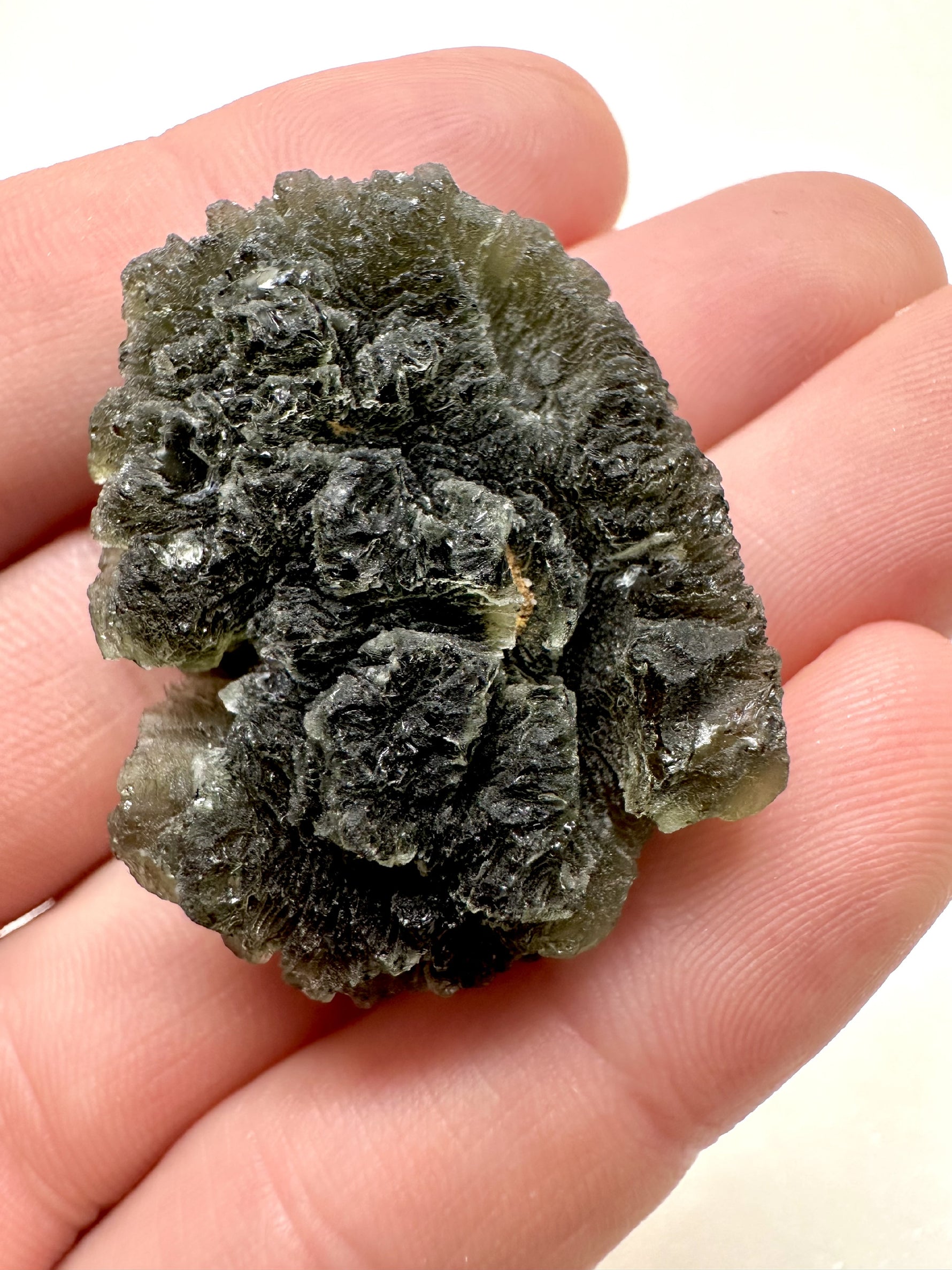
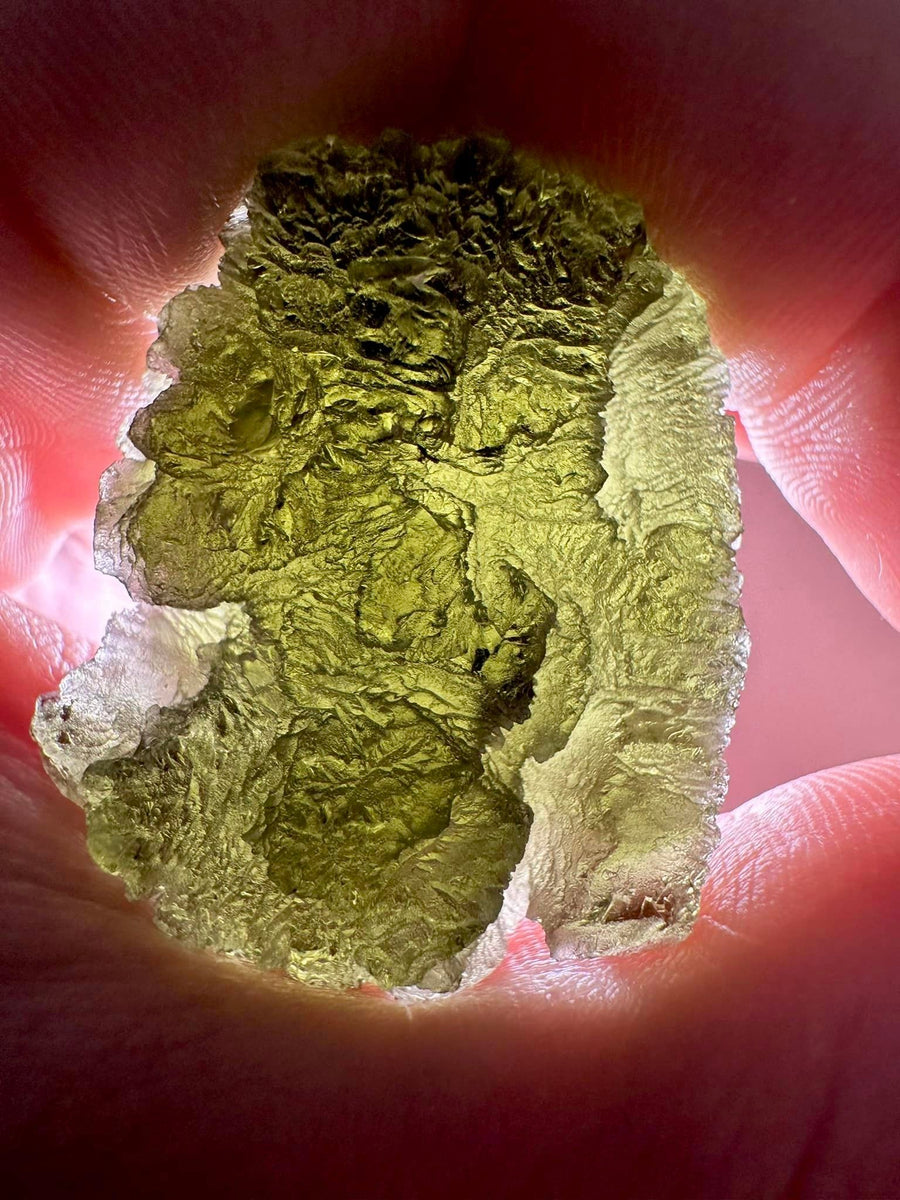
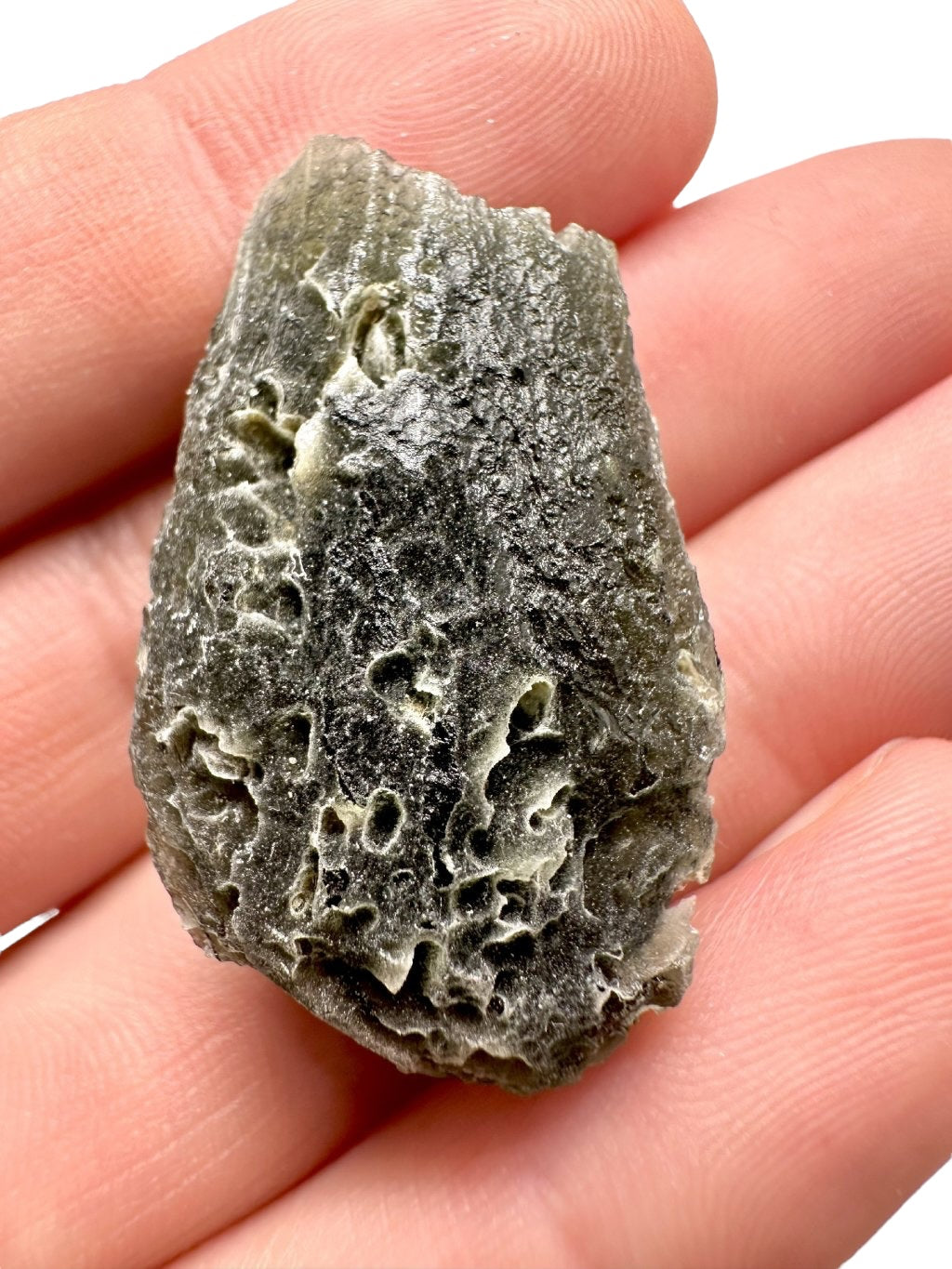
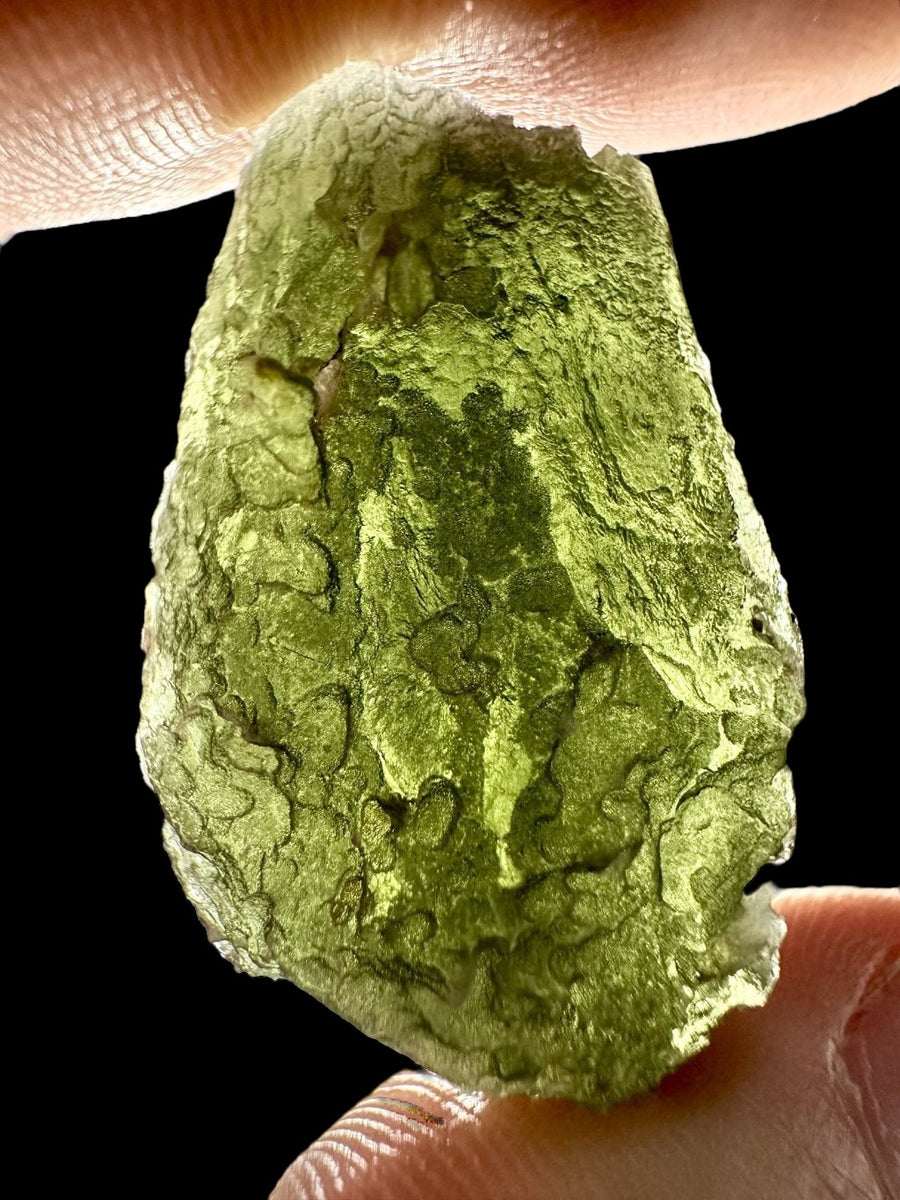
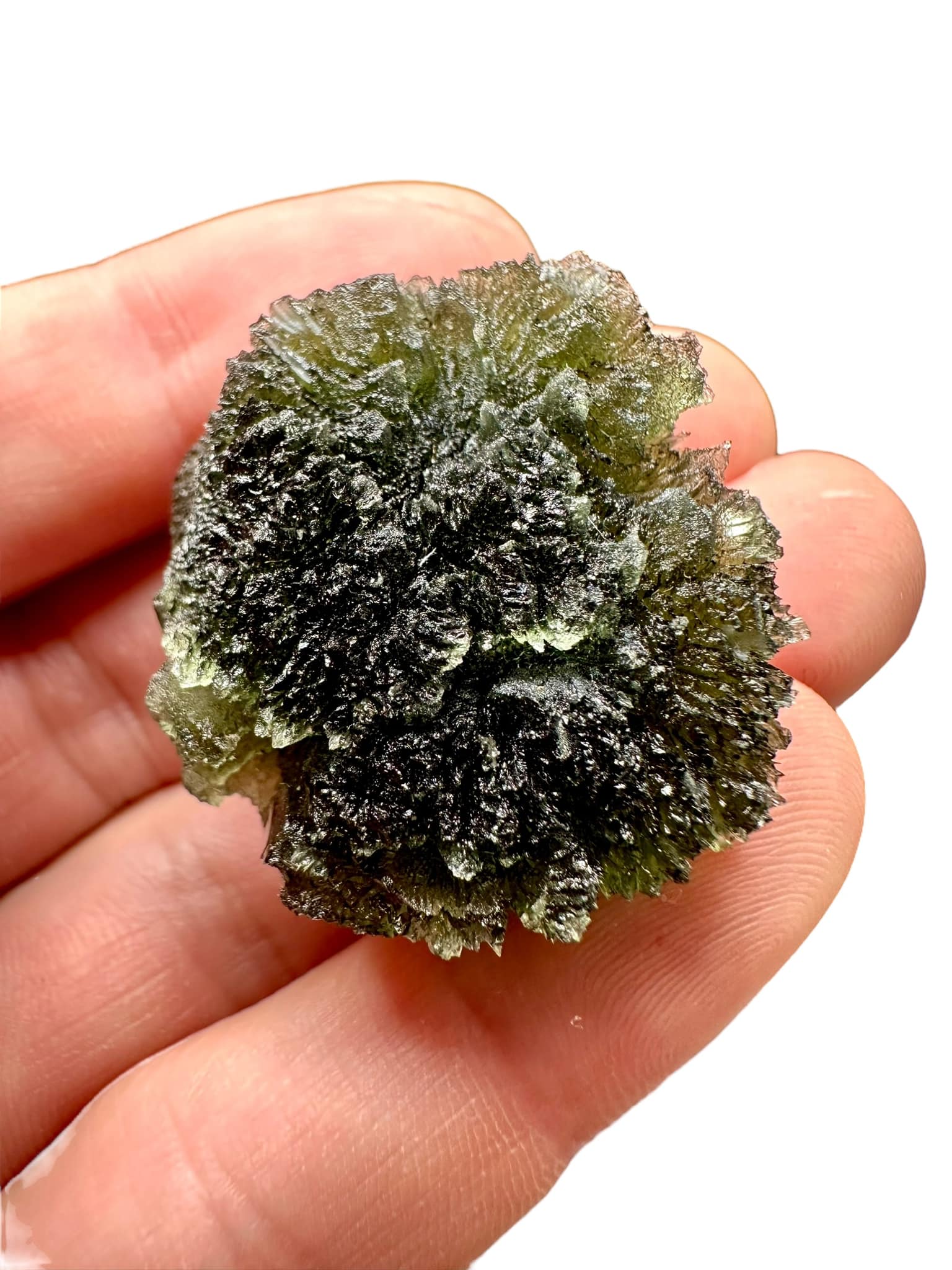
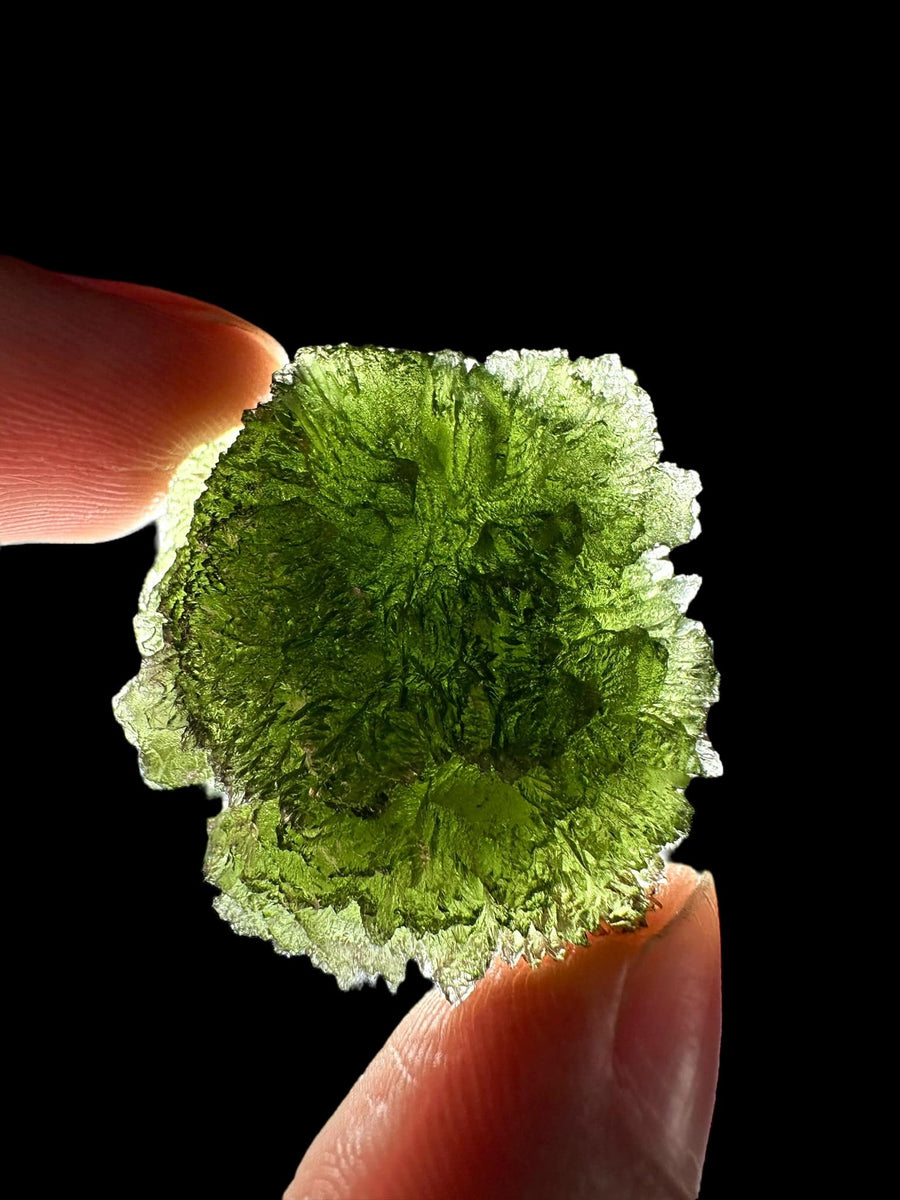
Authentic specimens from our catalog, from the snowflake localities, in natural light and backlit:
Continue in the guide
Authentic moldavite, from legal sources
Certified pieces with declared origin, selected at the source in the Czech Republic — never from excavations that damage the territory.
Explore raw moldavite Why certified