


What is Moldavite? Formation and Shapes
A glass born from the impact of a meteorite, hurled into the sky and sculpted by almost 15 million years of erosion. Discover how moldavite was formed and why every piece is as unique as a fingerprint.
01An impact glass called tektite
Moldavite — called vltavín by the inhabitants of the Czech Republic — is a natural impact glass, i.e., a tektite. It formed when a meteorite struck the area of present-day Germany, creating the Ries crater and producing splash-form and Muong Nong type moldavite. To understand where it fell, read where moldavite is found.
The meteorite that created the Ries crater hit Earth at approximately 20 km per second: the impact vaporized and melted the surrounding rock and soil. It is estimated that approximately 10⁶ tons of moldavite were formed about 14.8 million years ago, of which only 1% has survived to this day: the rest has been eroded and absorbed by the ground over the ages.
More precisely, moldavite is a splash-form tektite that tends to take on a teardrop shape. Imagine millions of drops of molten glass flying through the sky like huge raindrops after impact: most shattered upon landing at very high speed, giving rise to discs and countless smaller fragments. Over 14 million years of erosion then did the rest, making each piece unique.
02Primary shapes
Primary shapes are the most intact and originate directly from the original teardrop shape. They are rare: they represent less than 1% of all pieces found, and due to their symmetry and completeness, they are the most sought after. The main ones are teardrop, disc, ellipsoid, and hourglass. For a dedicated in-depth study, see the guide to moldavite shapes.
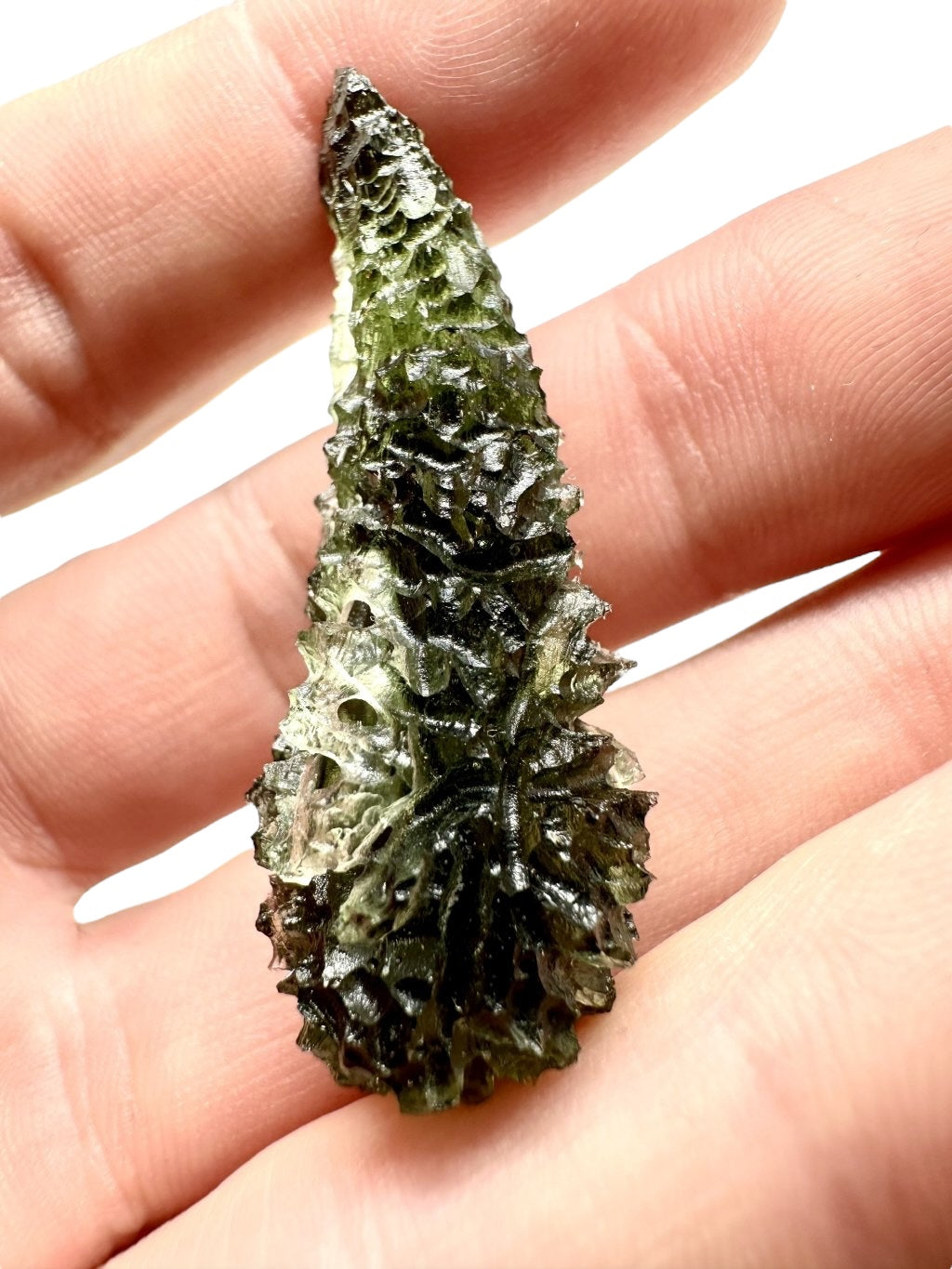
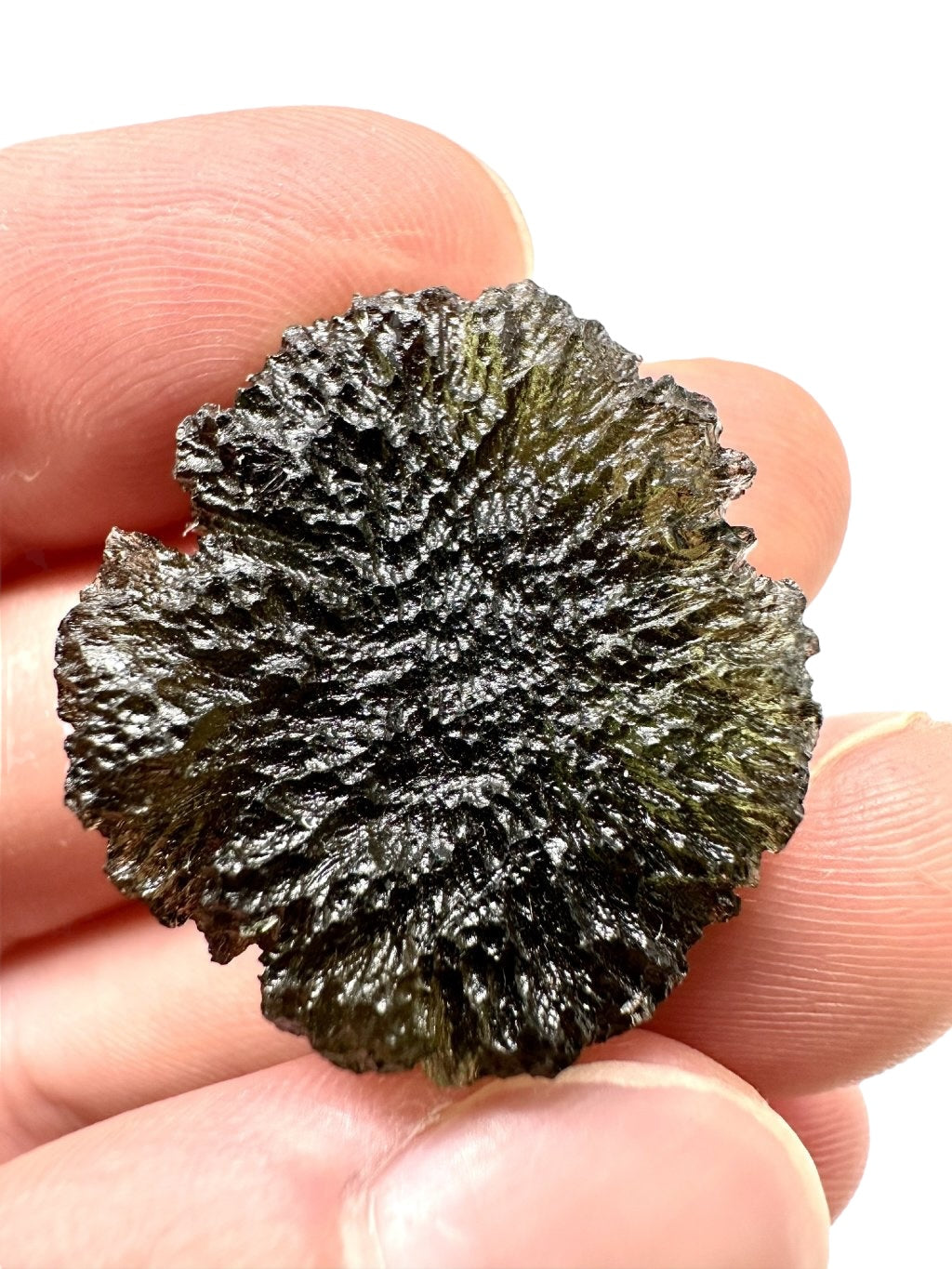
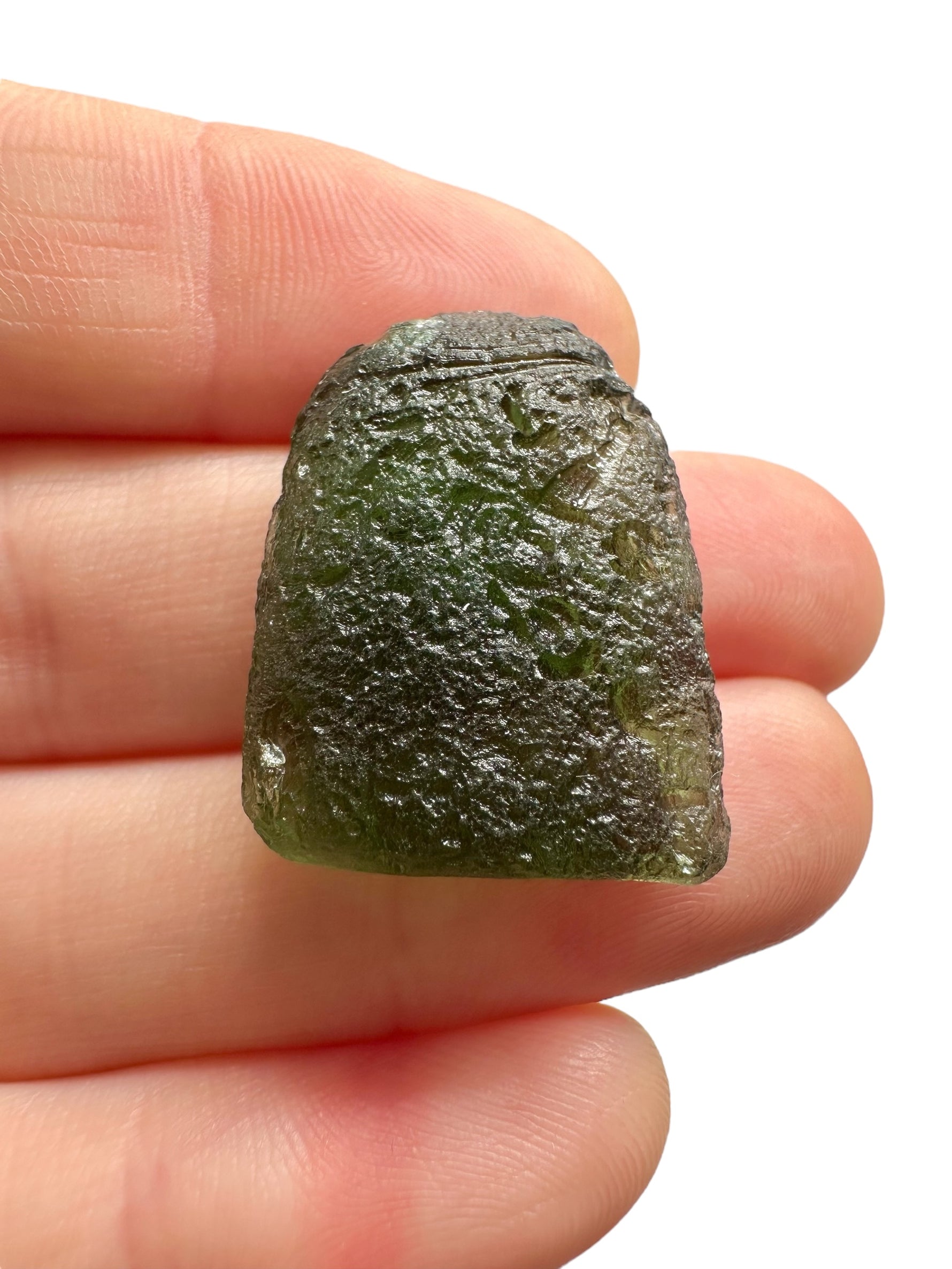
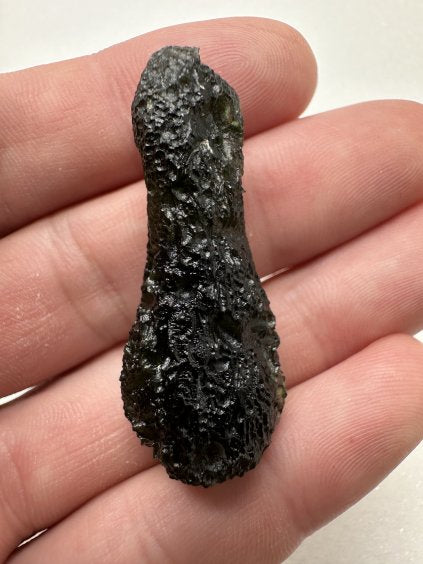
The teardrop is the closest to the original splash shape. The disc originates from drops with a wider and rounder body. The ellipsoid has a flat, oval body. The hourglass — the rarest of all — forms by rapidly rotating when molten, remaining narrower in the center and thicker at the ends.
03Non-primary shapes (fragments)
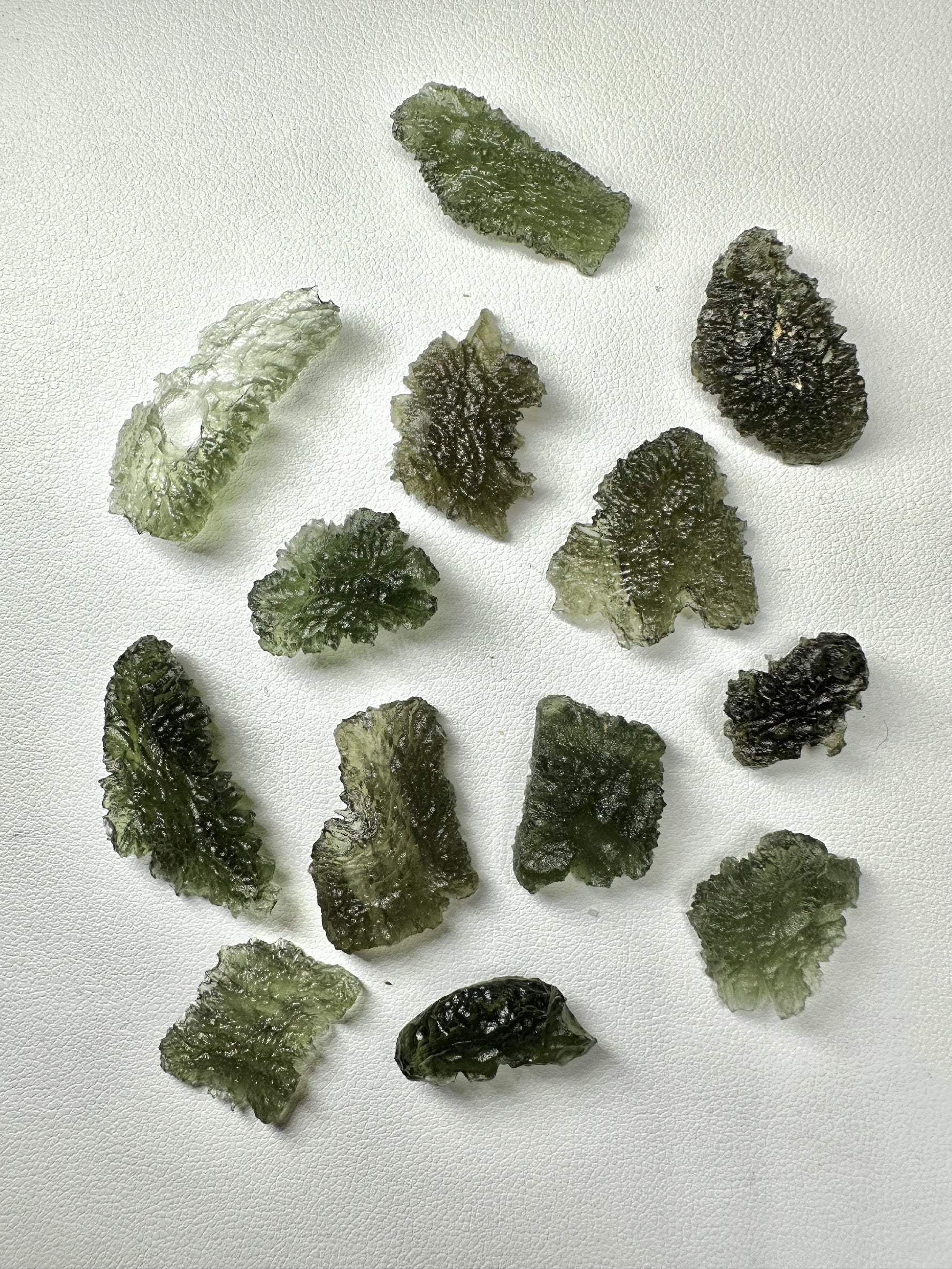
Fragments constitute the vast majority of found moldavite. When molten drops hit the ground at very high speed, most shattered into small pieces, further eroded over millions of years to form unique and unrepeatable shapes.
An important note: being a fragment of a larger piece does not change the stone's energy in any way, because all moldavite originated from the same explosive impact.
04The Muong Nong type
Muong Nong type moldavite is a layered tektite, free of internal stress, usually with a higher content of internal bubbles and frothy lechatelierite. It is not common and often appears less transparent or less striking than classic teardrop moldavite.
All moldavite is wonderful
Over the last 14.8 million years, the shape of moldavite has been sculpted by mechanical factors (breakage, erosion, abrasion) and chemical factors, responsible for surface sculpting. There is no "best" shape: it's a matter of personal taste, although some remain rarer — and therefore more precious. This very variety of shapes and sizes makes moldavite accessible to anyone who falls in love with it.
Continue the guide
Discover authentic raw moldavite
Each piece is unique, hand-selected at the source and certified. Find the shape that excites you most.
Explore the catalog How to recognize authentic moldavite